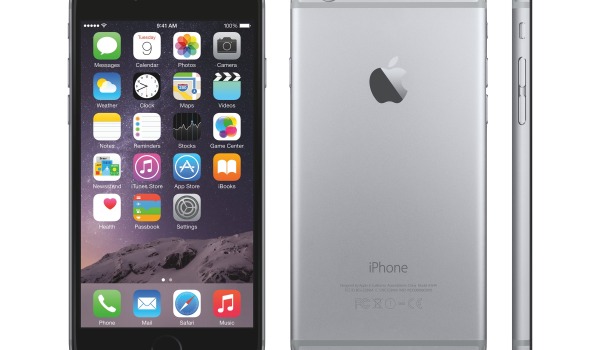
After months of conflicting rumors, Apple has introduced the iPhone 6 and iPhone 6 Plus. The iPhone 6 sports a 4.7-inch screen while the iPhone 6 Plus boasts a mammoth 5.5-inch screen. Both screens feature sharp new “Retina HD” displays, and while both units have gotten larger, they are thinner than the iPhone 5s.
The iPhone 6 display has a resolution of 1334 x 750 (326 pixels per inch) while the iPhone 6 Plus comes in at 1920 x 1080 (401 pixels per inch). On paper the iPhone 6 Plus display is better, but it’s also a damn big phone. Apple says both displays boast deeper blacks, sharper text, a wider viewing angle, and a improved polarizer to help you see the screen in the sun when you’re wearing sunglasses. (Nice.)
The new iPhone 6 and 6 Plus are available in the standard Space Gray, Silver, and Gold. The storage amounts have changed, though:
The iPhone 6 starts at 16GB for $199 with a two-year carrier contract, then jumps to 64GB for $299 before doubling that reach 128GB for $399.
The iPhone 6 Plus starts at 16GB for $299 with a contract, then jumps to 64GB for $399 before hitting 128GB at $499.
In addition to a sharper, larger display, the iPhone 6 Plus has one extra benefit: Optical image stabilization. The iPhone 6 only has software-based image stabilization. If you have shaky hands or want to shoot video while moving, the iPhone 6 Plus might be worth the extra size and cost.
Still, both iPhones include new focusing features as well as faster frame rates for video — up to 60fps for 1080p video and 240fps for slo-mo. Better still, video now has a continuous focus feature that lets objects close to the camera zip into focus quickly and automatically, and then, when removed ensure that the rest of the shot remains in focus, too. The front-facing FaceTime HD camera will capture 80% more light with a new sensor, which means you can have FaceTime conversations even when you’re in a poorly lit hotel room far away from your family.
A8 Chip, M8 Motion Coprocessor
Apple’s new A8 and M8 processors in the iPhone 6 and 6 Plus are 64-bit, newer generations over the A7 and M7 in last year’s iPhone 5s. They gather data from a new sensor, too, a barometer, which can help identify the vertical distance you gain while doing something like running stairs for exercise.
Apple doesn’t exactly say how much faster and more efficient it is over the A7 and M7, but it seems to be about 25% faster for CPU processing over the 5s and 35-40% faster for graphics processing over the 5s. After launch Apple may publish more specific data. The end result is that the iPhone 6 is the fastest you’re going to see from Apple for at least another year.
Apple Pay
If you want to use Apple’s new Apple Pay system that turns your iPhone into a virtual wallet for your credit cards, you’ll need an iPhone 6 or 6 Plus. In 2015, you can use Apple Pay with an Apple Watch, paired with an iPhone 5 or 5s. What’s cool is that you can make a retail transaction with Apple Pay without even unlocking your iPhone 6. Just touch the Touch ID button in front of the NFC reader at a participating retail store, and you can make an insanely fast purchase. No need to show a driver’s license or even let the checkout person see your name.
Pre-orders will start on September 12 while retail availability will begin September 19.